note
Jun 16, 2026 / 4 min read
The Door You Left Open
On the gap between being useful and being present.
- filed under Essay / Care / Relationships
- author Shuvam Pandey
writing
At nine one night, you told me something that should have made me stop.
The sentence belongs to you, so I will not place it here. I will only say that it was heavier than the way you said it. You had tucked it into an ordinary conversation and spoken quickly, as though giving me the chance to miss it.
I answered:
Huss.
Then I closed the chat.
I have returned to that word many times. It is such a small, useful word. It can mean okay. I heard you. All right. It keeps a conversation moving without asking either person to remain inside it.
That night, it meant I had found the smallest possible response to something that deserved my whole attention.
I knew how to care for you through tasks.
When you needed old question papers, I found them. When a circuit refused to work, I stayed awake with you until it did. I sent notes, links, explanations, encouragement. I told you that you would do well, and I meant it every time.
There was comfort in being useful. A problem gave me a place in your life. It told me what to bring and when I could leave. I could measure my care by the thing that had been solved.
The difficult part came afterward.
Once the circuit worked, the silence returned. Once the exam was over, I did not know what question remained. I had spent so long arriving with something in my hands that I did not know how to arrive as myself.
So I kept my hands full.
You rarely asked for attention directly. You would leave something near me and wait to see whether I noticed. A name spoken more quietly than the rest of the sentence. Something a stranger had done to you, mentioned with a laugh that arrived too quickly. A hard truth placed at the edge of the conversation, close enough for me to reach, easy enough for me to pretend I had not seen.
You never made me responsible for walking through the door.
I used that freedom badly.
For a long time, I told myself I had simply missed the signs. That version made me careless, perhaps, but innocent.
The truth is less comfortable.
I noticed.
Maybe I did not understand everything, but I understood that there was more. I felt the conversation open and knew another question was waiting. I also knew that asking it might change the evening. It might bring an answer I could not repair. It might require me to remain after every intelligent and comforting thing had been said.
So I chose huss.
The word acknowledged you just enough for me to feel kind.
Then it left you alone.
You did not confront me. You did something quieter. You adjusted.
You learned which parts of yourself could be brought to me safely. You learned that I could be trusted with the question paper and perhaps not with the fear beneath it. You kept speaking to me, but certain things began finding other places to live.
I did not understand that a person can remain warm while moving further away.
Then I disappeared.
Silence did not begin as six months. It began as one reply I planned to send later.
The next day, returning required a reason. After a week, it required an apology. After a month, I felt I needed an explanation large enough to justify the absence.
I had none.
The silence grew around that lack. Each day made the next message harder, so I kept choosing the temporary relief of saying nothing.
It was temporary only for me.
You had to wake inside the silence and decide what it meant. You had to wonder whether I was busy, whether something had happened, whether you had said too much, whether the friendship had mattered differently to each of us.
I gave myself uncertainty as an excuse.
I gave it to you as a place to live.
Perhaps you defended me. Generous people often protect the person who has disappeared because anger feels too final. Perhaps you told yourself I would return when I could.
Or perhaps you understood before I did that avoiding the discomfort of coming back had become more important to me than what my absence was doing to you.
I want to say that is unfair.
Six months of silence says it more convincingly than I can.
When I finally returned, you were warm.
I took your warmth as permission to continue. I wanted the old rhythm immediately. I wanted the ease without having to stand inside the damage that had happened while I was gone.
I confused being welcomed with being restored.
You had continued living. You had built routines that did not include waiting for me. You had found other people, or learned to keep certain things to yourself. You had been forced to make my absence mean something, because I had refused to give it meaning myself.
Then I arrived expecting to be placed back where I had been.
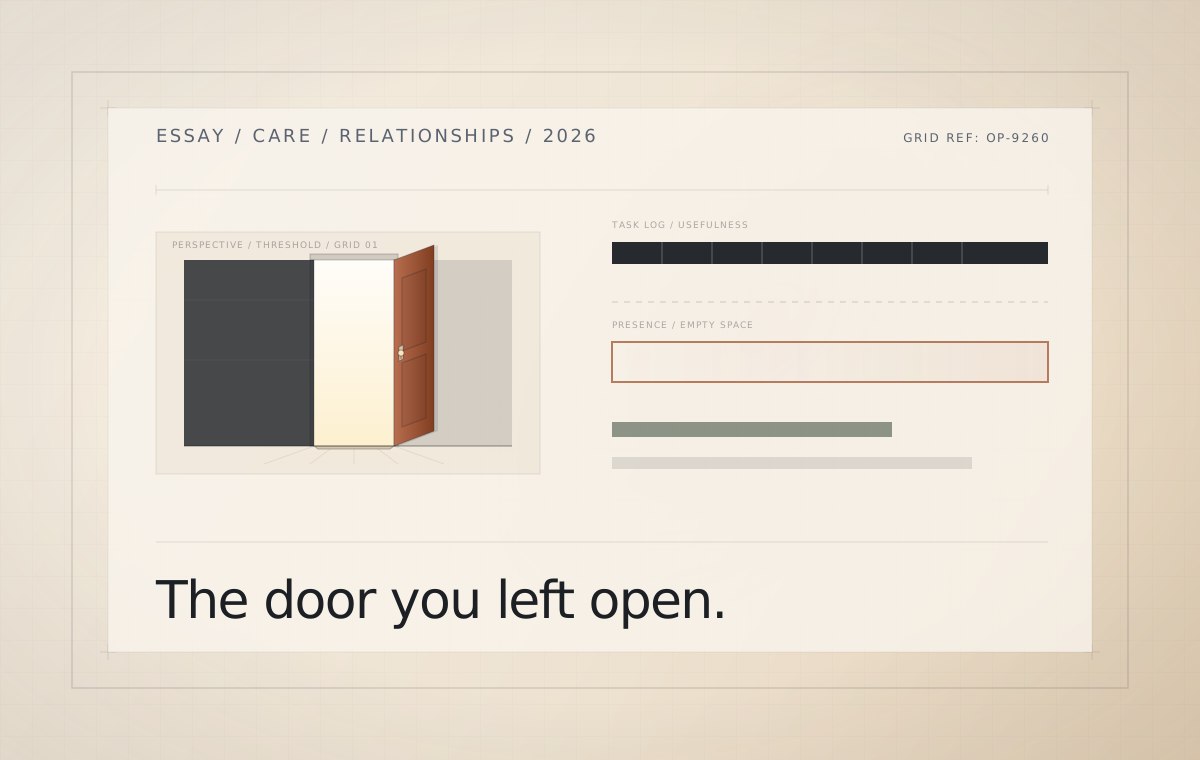
A door can remain open after the room has changed.
The chair may have been moved. The light may be lower. The person inside may have learned to sleep without listening for footsteps.
I used to think presence meant being available. My phone was on. I answered when someone needed something. I stayed until the practical difficulty had passed.
I understand it differently now.
Presence is allowing another person’s sentence to alter the rest of your evening.
It is noticing when the voice has changed. It is asking the question that might make the conversation less comfortable. It is remaining when there is no solution to carry, no advice worth giving, no clean way to make the pain smaller.
That kind of attention frightened me because it left me with nothing to prove.
A solution kept me competent. Your sadness might have made me helpless. I might have had to sit beside it without improving anything. I might have had to let you see that I did not know what to say.
I might have had to trust that staying was enough.
Instead, I said you will do great. Sometimes because I believed it. Sometimes because encouragement gave the moment a neat ending. It allowed me to sound loving and still go home untouched.
Tell me more would have opened time.
It might have changed what you trusted me with. It might have required something from me the following morning, and the morning after that.
It might have made care less impressive and more real.
The door is still open.
I used to hear mercy in that sentence.
Now I hear time.
I do not know why you have left it open. Maybe affection is still there. Maybe it is habit. Maybe closing it would require an anger you no longer want to spend on me. Maybe some part of you still believes I could become more courageous than I have been.
I cannot turn your openness into evidence that I have been forgiven. I cannot call the door open and pretend I am already inside.
There is still a distance to cross.
For once, I have nothing useful to carry across it.
No paper. No link. No explanation large enough to repair six months. No promise that I will know what to do with whatever you tell me.
Only the message I should have sent that night:
I have been thinking about what you said.
I should have asked then.
If you still want to tell me, what happened?
The rest is harder.
The rest is staying when the answer comes.
next note
The Room Where Love Became Obedient
On Gunahon Ka Devta, Chander's clean-looking cowardice, and the violence hidden inside worship.